How to Rent a Self-Storage Unit: A Beginner’s Guide
How to Rent a Self-Storage Unit: A Beginner’s Guide
—
July 27th, 2026
First time renting a storage unit? You're not alone. One of the first questions most people ask is, "What size do I need?" After that come questions about climate control, pricing, insurance, and whether month-to-month storage is really as flexible as it sounds.
The good news? It's much simpler than it seems. This beginner's guide to self-storage walks you through everything you need to know before you reserve a unit.
Key Takeaways
- Self-storage is simpler than it looks. You rent a private, lockable space by the month. You keep the key. You access your unit on your schedule.
- Choosing the right unit size can save you money and frustration. Most first-time storage renters go too large and overspend, or too small and run out of room. A little planning upfront saves money.
- Climate-controlled storage units are worth it for certain belongings, but not everything needs it. Wood, electronics, artwork, and documents benefit from it. Lawn equipment and plastic bins generally do not.
- Month-to-month storage is standard. You are not locked into a long contract at most facilities. Rent for as long as you need, then move out when you are done.
- Your stuff is not automatically covered by the facility. Check your homeowners or renters insurance policy, or add a tenant protection plan through your storage provider.
What Is Self-Storage?
Self-storage is a rentable space, usually a room or a locker-style unit, located at a dedicated storage facility. You pay a monthly fee for access to that space. You supply the padlock. Nobody else can enter without your key or access code.
That is the core of it. Storage facilities are simply buildings divided into dozens or hundreds of individual units at different sizes. Some are outdoor drive-up storage units with a roll-up door you can pull a truck right up to. Others are indoor storage units, accessible through a hallway, which tends to offer better protection from the elements.
You sign a rental agreement, set up a payment method, and the unit is yours until you decide to end the lease. Most facilities operate on month-to-month storage agreements, so you are not committed to six months if you only need three.
Common Reasons People Rent a Storage Unit
People use personal storage and business storage for all kinds of reasons. If any of the situations below sound familiar, a storage unit rental could be the extra space you need.
Moving storage
This is one of the most common triggers. If your move-in and move-out dates do not line up, a storage unit becomes a holding area for your belongings. It gives you flexibility instead of forcing a mad scramble.
Decluttering without committing
Not ready to sell or donate the furniture in the spare room, but need that room back? Storage lets you clear the space now and make the final call on your belongings later.
Seasonal storage
Jet skis, snowblowers, holiday decorations, camping gear. Items that only get used part of the year take up valuable space the rest of the time. A storage unit solves that cleanly.
Life transitions
Divorce, the death of a family member, a job relocation, a college student heading home for the summer. Storage serves as a buffer during periods of change when you need more flexibility than a spare closet can offer.
Business storage
Small business owners use storage for inventory, equipment, marketing materials, and archived documents. A 10x10 unit is far cheaper than commercial office overflow space.
How to Pick the Right Size
Unit sizes are measured in feet. The first number is the width, the second is the depth. A 5x10 unit is five feet wide and ten feet deep, giving you 50 square feet of floor space. A 10x20 unit gives you 200 square feet.
Here is a practical breakdown of common storage unit sizes:
5x5 (about the size of a large closet)
Good for boxes, small furniture, and seasonal items. If you are storing the contents of one room or less, start here.
5x10 (about the size of a walk-in closet)
The most popular size for single-room moves or a one-bedroom apartment's worth of furniture when combined with smart stacking. A couch, a few dressers, and 20 to 30 boxes fits comfortably.
10x10 (half a standard one-car garage)
Works for a furnished two-bedroom apartment. You can fit a dining set, bedroom furniture, appliances, and a solid stack of boxes in this size.
10x15 (three-quarters of a garage)
The right call for a larger two-bedroom or a small three-bedroom home. Gives you room to stack high and still access the front without digging.
10x20 (a full one-car garage)
Handles the contents of a three or four-bedroom home. Also popular for vehicle storage at facilities that allow it.
If you're between sizes, choosing the next size up is often worth it. A little extra room makes loading, organizing, and finding your belongings much easier. The cost difference between a 5x10 and a 10x10 is usually $30 to $50 per month. Having room to walk in and find what you need is worth more than the savings from cramming everything into a unit that is too small.
FreeUp Tip: Leave a small aisle down the center of your unit so you can reach boxes toward the back without unpacking everything. It takes up a little floor space but saves a lot of time on every visit.
Once you've chosen the right size, the next question is whether you need climate-controlled storage.
Climate Control: What It Is and When You Need It
A climate-controlled storage unit maintains a stable temperature year-round, typically between 55 and 80 degrees Fahrenheit. Some also regulate humidity. Standard units do not have this feature, and their internal temperature tracks with the outside air.
That matters for some items and not at all for others.
Items that benefit from climate-controlled storage:
- Wood furniture, which can warp or crack in extreme temperature swings
- Electronics, which can be damaged by condensation and humidity fluctuations
- Documents, photographs, and artwork
- Musical instruments
- Wine and specialty foods
- Clothing stored long-term, especially leather and delicate fabrics
Items that do not need it:
- Lawn and garden equipment
- Metal tools
- Plastic bins and containers
- Most sports equipment
- Vehicles (unless they have sensitive electronics or interior materials)
If you are storing things you would describe as valuable, irreplaceable, or sensitive to moisture, pay for climate control. If you are storing your garage overflow for a few months, a standard unit is fine.
FreeUp Tip: Take photos of valuable items before storing them. It takes five minutes and gives you solid documentation for insurance purposes if you ever need to file a claim.
What You Can and Cannot Store
Self-storage is designed for personal property and general household goods. The list of what you can store is long. The list of what you cannot is short but worth knowing.
Typically allowed:
- Furniture and appliances
- Clothing and personal items
- Boxes of household goods
- Electronics
- Business inventory and equipment
- Vehicles (at facilities that allow it, with the right unit type)
- Sports equipment and recreational gear
Not allowed at most facilities:
- Flammable or hazardous materials (gasoline, propane, paint)
- Explosives or ammunition
- Perishable food
- Living plants or animals
- Illegal items of any kind
- Running vehicles left idling
When in doubt, call and ask before you load the truck. Facility staff have heard every question and can tell you quickly whether something is a problem.
Storage Unit Insurance: Don't Skip This Part
The storage facility is responsible for maintaining a secure storage unit environment. They are not responsible for covering the value of your belongings if something goes wrong.
Before you assume you need to purchase a separate plan, check what you already have. Many homeowners and renters insurance policies extend coverage to items stored off-premises, often up to 10 percent of your total personal property coverage. A quick call to your insurance provider will confirm whether you are already covered and for how much.
If your existing policy does not cover off-site storage, or the coverage limit is lower than the value of what you are storing, most FreeUp Storage locations offer tenant protection plans starting at around $10 to $15 per month. That is a small cost relative to the peace of mind, especially if you are storing electronics, furniture, or anything with real replacement value.
FreeUp Tip: Before you sign your rental agreement, have your insurance provider's contact information ready. Most will tell you over the phone in a few minutes whether your belongings are covered in an off-site storage unit.
Moving Into Your Storage Unit: What to Expect
Once you have reserved your unit online, move-in is straightforward. Here is what to expect:
Prepare for Move-In Day
Before you arrive. You will get a confirmation with your unit number and access instructions. Bring a government-issued ID. If you are using a truck or trailer, check whether the facility has drive-up storage units available so you can unload directly without carrying boxes through a hallway.
Complete Your Check-In
At the facility. Check in at the office or kiosk (some facilities are fully automated). You will complete your rental agreement if you have not already done so online, and you may receive a gate code or access card for the facility entrance.
Secure Your Belongings with the Right Lock
Your padlock. You supply this. Buy a disc lock or a closed-shackle padlock before you arrive. These are harder to cut than standard padlocks, and most facility staff will recommend them. Some facilities sell locks on-site if you forget.
Pack and Organize for Easy Access
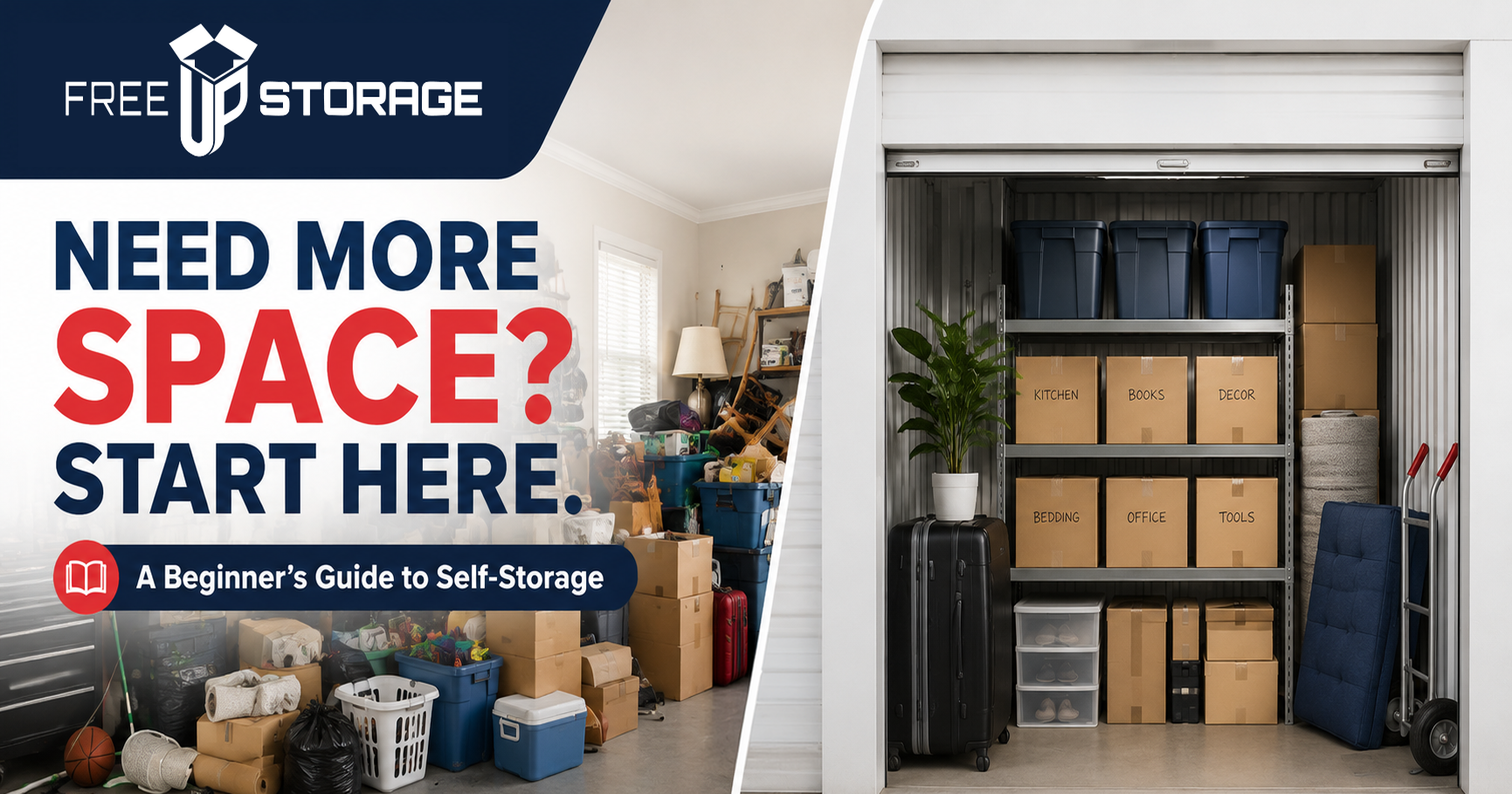
Loading your unit. Put items you will need to access frequently near the front. Heavy boxes go on the floor. Lighter boxes go on top. Label every box on the side facing the aisle, not the top, so you can read them without moving anything.
Understand Facility Access Hours
Access going forward. Most facilities have extended access hours, and some are open 24 hours. Check your facility's specific hours. You can visit as often as you need for the duration of your rental.
Frequently Asked Questions
Q: How much does a storage unit cost near me?
Storage unit cost varies by city, size, and unit type. In most markets, affordable storage units start around $25 to $60 per month for a 5x5, and $90 to $175 per month for a 10x10. Urban areas and high-demand zip codes tend to run higher. The best way to get an accurate price is to search storage near me on the FreeUp Storage website, which shows real-time availability and pricing at your closest location.
Q: Where can I find climate-controlled storage near me?
FreeUp Storage offers climate-controlled storage units at many locations across the country. If you're searching for climate-controlled storage near me, use our location finder to see which nearby facilities have temperature-regulated units available and what sizes are in stock.
Q: What is the difference between indoor and drive-up storage units?
Indoor storage units are accessed through an interior hallway inside a climate-controlled building, which provides added protection from weather and temperature fluctuations. Drive-up storage units sit along an exterior row, and you can pull your vehicle directly to the door, which makes loading and unloading larger or heavier items significantly easier. Many FreeUp Storage locations offer both, so you can choose based on what you're storing and how often you plan to access the unit.
Q: Are there affordable storage units for people on a tight budget?
Yes. Month-to-month storage means you only pay for the time you actually use, which keeps costs predictable. Choosing the smallest size that genuinely fits your belongings is the most reliable way to keep your storage unit cost down. Many FreeUp Storage locations also run first-month promotions for new renters, so it is worth checking current offers at your nearest location before you book.
Q: Can I use a storage unit for my small business?
Business storage is one of the most practical and affordable uses for a storage unit. A 10x10 or 10x15 unit can hold inventory, equipment, seasonal displays, and archived files at a fraction of the cost of commercial warehouse space. Some FreeUp Storage locations also offer drive-up access, which makes restocking and retrieving inventory much more convenient for business renters.
Q: How do I find secure storage units near me?
Look for facilities with gated access, individual entry codes, perimeter fencing, and on-site security cameras. FreeUp Storage locations are built around these features, and your unit is secured by your own padlock so only you have access. When comparing options for storage near me, ask each facility directly about their security setup before committing.
Q: Is month-to-month storage really flexible, or are there hidden fees?
Genuinely flexible month-to-month storage means you can end your lease without a long notice period or early termination penalty. At FreeUp Storage, there are no long-term contracts required. Read your rental agreement before signing and look for any clauses around notice periods, which are typically 10 to 30 days, and administrative fees. These are standard in the industry and not hidden, but worth understanding before move-in day.
Find the Right Storage Unit at FreeUp
Getting the size right is the most important decision in the storage unit rental process. Everything else, pricing, access, lease length, is easier once you know what you need.
Whether you are moving, decluttering, or looking for reliable business storage, FreeUp Storage has a range of unit sizes available with month-to-month leases and no long-term commitment. Browse what is available at your nearest location, compare sizes side by side, and reserve online whenever you are ready.
The FreeUp Storage Blog